the PartnerShip Connection blog
the PartnerShip Connection blog
the PartnerShip Connection blog
the PartnerShip Connection blog
the PartnerShip Connection blog
-
LTL vs. Truckload Freight. What’s the Difference?
02/22/2026 — PartnerShip
Less-than-truckload (LTL) and truckload freight shipping may appear to be similar but they are two very different shipping services. Many shippers exclusively use one or the other, but they can be used together. To help you ship smarter, here are the four main differences between LTL and truckload shipping and rates.

Transit time and handling
LTL: LTL shipping combines shipments from multiple customers so your freight isn’t the only freight on the truck; it shares space (and cost) with other company’s freight and will make multiple stops at terminals between the shipper and consignee. For example, the freight you are shipping from Cleveland to Houston may make stops in Indianapolis, Nashville and Dallas before reaching its final destination. At each stop, your freight is unloaded and reloaded and must wait for the next truck, increasing transit time and handling, and the possibility of damage.
Truckload: When you ship full truckload, your freight is the only thing on the truck. The carrier will make a pickup at the origin and drive straight to the destination. Aside from driver rest breaks, fuel and equipment issues, the truck doesn't stop, resulting in much faster transit times. In addition, your freight never leaves the truck, resulting in much less handling and fewer opportunities to be damaged.
Weight and shipment size
LTL: Less-than-truckload shipments are typically between one and six pallets and weight from 200 to 5,000 pounds. LTL freight usually takes up less then 12 linear feet of the trailer, and since the typical pallet measures 40” x 48”, 6 pallets arranged side-by-side would take up exactly 12’ of linear space on each side of the trailer.
Truckload: A full truckload shipment can range from 24 to 30 pallets and up. With truckload freight, the space your shipment takes up in the trailer has more of an impact than weight, so truckload shipments commonly range from 5,000 pounds to 45,000 pounds and up.Pricing
LTL: The most significant difference between LTL and truckload shipping is the pricing. LTL freight pricing is regulated by the National Motor Freight Traffic Association (NMFTA) which is a nonprofit membership organization made up primarily of interstate motor carriers. It classifies all freight based on its commodity, density, and ease of transport. LTL carriers each have standard LTL rates which are determined by your origin and destination, your freight’s NMFC class, the amount of space it occupies on the truck, and any accessorials you require. All of these variables are factored into the LTL rate you pay.
Truckload: Truckload freight pricing is completely dependent upon the market. With no pre-established rates, truckload freight negotiations happen as needed over the phone or through email. Truckload rates fluctuate, sometimes by the week, day or even by the hour. Factors that drive pricing include the origin and destination, weight of the shipment, seasons (such as harvest season or even back-to-school season), truck capacity and location, the shipping lane or route, and fuel and operating costs. Typically, there are no contracts with truckload carriers, which can vary from an owner/operator with one truck to huge truckload shipping companies with thousands of trucks in their fleet.
Reefer availability
LTL: Refrigerated LTL shipments are a bit more difficult to find and secure than dry van LTL shipments. Most reefer LTL carriers have schedules that are determined by lanes and temperatures. As an example, an LTL reefer carrier might pick up in southern California on Wednesday and may run at 45 degrees with a set delivery route and schedule. This can make finding an available reefer LTL carrier difficult, especially for one-off shipments or on short notice.
Truckload: Reefer trailers are common and readily available. Reefer trailers can range from below zero to seventy degrees, and since only your freight is on the trailer, the shipment can move on whatever schedule and temperature you need it to. Aside from the temperature control and being a bit more expensive, refrigerated truckload shipments aren’t much different from dry truckload shipments.
PartnerShip is an expert at providing you the best rates on both LTL and truckload freight shipping so you can stay competitive. Contact our shipping experts whenever you need to ship smarter.
Get a free quote on your next LTL freight shipment or truckload freight shipment!
Click to read more... -
For Good Measure: How to Avoid Freight Reweighs
02/10/2026 — Jen Deming
LTL shipping requires plenty of diligence and double checking on behalf of the shipper. All may seem in order: you've used proper packaging, paperwork is up to date, shipping addresses reviewed, accessorial requirements checked, and you are confident you are using the proper freight class. Then it happens. Your shipment is delivered safe and sound, but when the invoice arrives, your bill is nearly $100 over what you had anticipated. On further review, you learn you've been hit with a reweigh fee by the carrier. How did this happen?
Freight reweighs are becoming more and more frequent, especially as dimensional and density based pricing becomes more common. It's important to understand what constitutes a reweigh, and what puts your shipment at risk. Many shippers, particularly small businesses, do not have certified scales that are large enough to accurately measure a larger LTL (less-than-truckload) shipment. This means that many of the weights listed on the BOL (Bill of Lading) are approximations, and carriers are pretty vigilant at checking for inaccuracies with their own certified equipment. A freight reweigh occurs when a carrier inspects and weighs the shipment and when the actual weight and the weight listed on the BOL do not match. One of the primary factors used to determine freight cost is weight, and in many cases, affects freight class as well. Often, a carrier will charge not only for the difference in weight, but also a fee for the freight reweigh itself.
To avoid a freight reweigh, it is so important that shippers try to avoid "guessing" their shipment weight. If your business does have a certified commercial scale, you are a step ahead of many other shippers. Be sure to have it calibrated and checked frequently to avoid miscalculations. If you do not have a scale, it is key to obtain accurate measurements and weights for ALL of the materials being shipped. This can be even more challenging if you are shipping an assembled, finished product made up of several separate pieces and different classifications. Add up materials used on product spec sheets, catalogue listings, and product invoices to get as accurate a weight as possible. It can be beneficial to look at any inbound shipping invoices for any pieces of your finished product that were shipped to you as a supply order. In short, don't be tempted to take shortcuts. It pays to take the time to measure individually and make educated and precise estimates.
Another mistake that many shippers make that encourage freight reweighs is neglecting to include packaging/packing materials in their calculation of gross weight. An average 48x40 pallet weighs around 30-40 lbs, and if you are shipping a multi-pallet load, that extra weight adds up fast. While it's always best to avoid guessing your shipment's weight, in the case shippers aren't able to weigh their shipments on a calibrated scale, it is important to factor this figure in the total. Additional materials used to protect your shipment such as molded plastic corner reinforcements, fiberboard, wooden stabilizers, and even foam inserts can increase weight, especially if you have a larger LTL shipment.
It's key to remember that accurate weight is not the only factor that affects your shipment- it helps to determine your freight class, as well. For heavier, denser items that fall into the lower NMFC classifications, total weight of the shipment is used to calculate at price-per-pound. For less dense shipments that take up more volume, your freight class can be higher and your shipping more expensive. If you happen to overestimate the weight of your shipment, and it falls into one of these higher freight classes, you will be charged more at the higher freight class. It is crucial for shippers to know their precise weight, freight class, and your freight density in order to estimate accurate shipping charges.
Even if you feel you've got everything in order, freight shipping can always lead to some surprises. While it's never a good idea to cut corners or knowingly try to mislead a carrier in the hopes of saving a couple bucks, sometimes even thorough shippers can get hit with some unforeseen charges. Don't let freight reweighs be one of them. The freight experts at PartnerShip have your back and can help make sure you are shipping smarter. If you have questions about determining your freight class or how working with a 3PL can help lower your shipping costs, call 800-599-2902 or email sales@PartnerShip.com to learn more.
Click to read more... -
3 Warning Signs Your Business Needs a Freight Broker
02/02/2026 — Jen Deming
Managing your growing business can present some unique challenges. On one hand, orders are coming in, your sales are increasing, and your customer base is thriving. The flipside to that success, however, may mean new operational issues that eat up your time and bottom line.
Shipping freight successfully during this growth period is a stumbling block for many business owners and logistics teams. You may find yourself needing more time and a larger workforce – at some point you may even wonder whether it’s time to outsource help. A freight broker can help manage many of your freight challenges, from overarching issues like lowering costs to tackling day-to-day issues like ensuring delivery accuracy. The bottom line is that you shouldn’t be stressing out more than enjoying the success of your business. If you’re experiencing any of these three signs your business needs a freight broker, it’s time to get the help from the experts .
Warning Sign #1 – You are making big mistakes when shipping orders
More sales is something to celebrate, but trying to keep up with the increase in orders without accommodating the volume is impossible. To make matters worse, packing and shipping is a very detail-oriented business, and rushing to get orders out quickly means an increased chance for error. There’s plenty of opportunity for mistakes that can snowball quickly.
Issues such as labeling or paperwork inaccuracies or even quoting errors can quickly escalate and create major problems. For example, something as simple as a wrong address on your freight shipment can, at best, cause delays. That means inconvenienced and aggravated customers. If your customer is paying for shipping, and you’ve quoted the cost incorrectly, you can’t go back and ask for more money – that’s your loss. You need to make sure you’re quoting freight accurately the first time by using exact details and the correct classification.
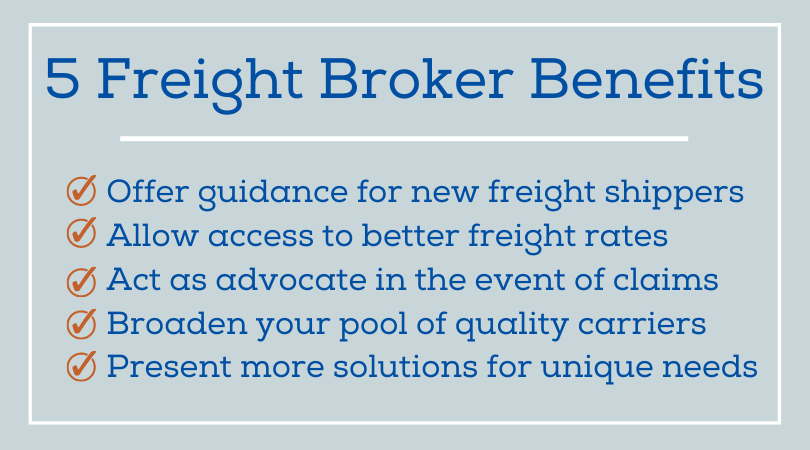
Mistakes like these cost you time and money, as well as customer satisfaction, which is pivotal when you’re a growing business. If you’re seeing shipping errors like those mentioned above, it’s definitely a sign that your business would benefit from a freight broker. A quality freight broker has a dedicated staff of freight experts who can help offer advice and resources on how to tackle the details that trip up many freight shippers.
A great freight professional can help you avoid mistakes by assisting with every step of the freight shipping process:
- Offer guidance on product classification and freight NMFC codes
- Collect competitive and accurate quotes from carriers who fit your needs
- Create necessary paperwork for delivery
Warning Sign #2 – Your billing department is becoming overwhelmed
Unless you’re an established, larger-sized business, it’s likely that your employees are juggling several different responsibilities. It’s not uncommon for a business owner to be playing the part of shipping manager and billing specialist to boot. Being burnt out and behind schedule is a pretty clear warning sign your business needs some help from a freight broker.
When your business is growing, it’s safe to say your shipment volume is increasing, and you may even be shipping with several different carriers or using a variety of services. Managing all of these invoices can be overwhelming, especially when you’re checking for accuracy, meeting payment due dates, and processing claims.
A freight broker can help simplify the billing process for your freight shipments by acting as an extension of your own team. Most will offer consolidated invoicing which can help cut down on billing chaos. You’ll also benefit from auditing services to double check for errors and savings opportunities. Should you experience damages, your broker can act as your advocate and help navigate the very particular requirements for filing your claim. Relying on these services can help shoulder some of the responsibility that your business just may not have the time or resources to do thoroughly on its own.
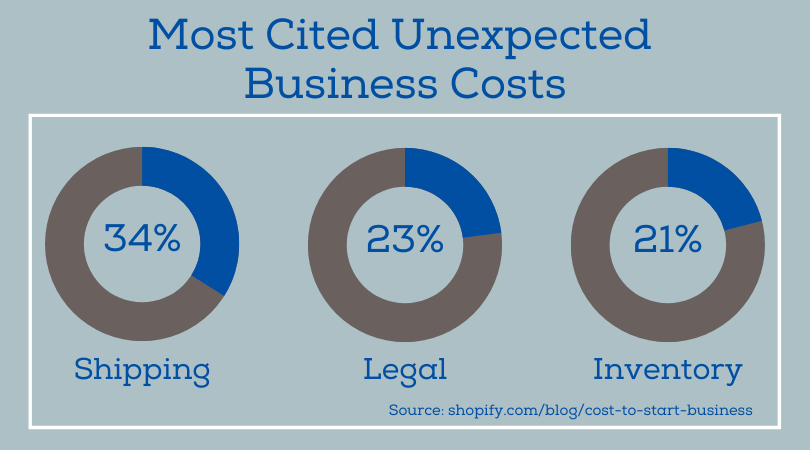
Warning Sign #3 – Your shipping costs are digging into your bottom line
Let’s face it, running a business is expensive, and while more customers mean a greater chance at making a profit, it can also mean that your shipping budget needs to increase. Between packing materials, labor, and freight transportation, these expenses can multiply quickly.
It’s key to make sure your freight rates make sense for your growing business. This can be done through carrier discounts and other means like order consolidation or taking a look at what types of LTL service providers work best for your business. Securing discounts and identifying savings opportunities can be challenging, especially if you’re not running a large corporation or shipping huge volumes of freight daily.
The great news is that through established carrier relationships and collective buying power, working with a broker can give your business access to higher freight discounts that are typically reserved for higher volume shippers. A quality freight broker will also a conduct cost savings analysis for your business to see where you are overspending on both inbound and outbound shipments. Lastly, they can also quote and compare among carriers to make sure you’re getting competitive pricing to help combat the current freight market.
Let us help you
Everyone wants to see their business grow and succeed, but keep in mind that as you do, new challenges will arise along the way. If you’re encountering major freight shipping issues like quoting inaccuracies, invoicing headaches, or rising costs, managing on your own may have run its course. These mistakes are signs that working with a broker may benefit your business, and PartnerShip can help get you started.

Click to read more...