the PartnerShip Connection blog
the PartnerShip Connection blog
the PartnerShip Connection blog
the PartnerShip Connection blog
the PartnerShip Connection blog
-
Your Essential Guide to the 2027 FedEx and UPS Rate Increases
11/05/2026 — Leah Palnik

Shipping in 2027 is about to get more expensive. FedEx and UPS are both increasing their rates by an average of 5.9%. But don’t let that number fool you — your actual costs will likely climb even higher. With UPS leading the charge on December 21, and FedEx following two weeks later, these increases will have a significant impact for shippers. The real challenge lies in the hidden complexities behind the changes. It’s essential to understand them so you know how your costs will be affected and what you can do about it.
Here's your guide to the FedEx and UPS rate increases for 2027. Jump to:
- A look back at the FedEx and UPS GRIs
- Important changes for 2027
- How the FedEx and UPS rate changes will affect your costs in 2027
- What you can do to mitigate the effects of the FedEx and UPS rate increases
A look back at the FedEx and UPS GRIs
FedEx and UPS have a long history of mirroring each other’s pricing. They typically announce the same general rate increase (GRI) and have very similar pricing strategies. Bottom line, the published rates aren’t a major differentiator between the two carriers. This marks the fourth consecutive year that both carriers have announced an average increase of 5.9%.
Some important quick facts about the new FedEx and UPS rates:
- The new FedEx rates take effect on January 4, 2027, while the UPS rates take effect two weeks earlier on December 21, 2026. Notably, UPS is raising its rates sooner, capturing more shipments moving through the end of peak season.
- The 5.9% average doesn’t take surcharges into account — many of which are increasing by more than 5.9%. When you are reviewing your shipping costs, its essential to budget for increases to surcharges as well.
- How much your costs actually go up in 2027 will be closer to 8-12% and will depend on several different factors. The services you use, the surcharges applied, your shipment dimensions and weight, and how far your shipments are traveling all have an effect.
Important changes for 2027
So you already understand that FedEx and UPS rates are going up in the new year. What does that look like exactly? While both carriers have announced an average increase of 5.9%, the changes aren't spread evenly across services, package weights, and surcharges.
Here are some key takeaways:
- The minimum charge for both carriers is increasing from $11.99 to $12.70. If you have discounts on your account, this heads-up is for you. Even if your discount would bring your base rate below that amount, you could still be paying the minimum of $12.70 instead.
- Lightweight packages are seeing some of the biggest increases. Both carriers are targeting shipments weighing 1–5 lbs, with FedEx Ground rates increasing an average of 6.49% and UPS Ground increasing 6.13% for these packages. If you regularly ship smaller, lighter packages, your costs could rise more than the announced average.
- Common delivery surcharges continue to climb faster than base rates. Common delivery surcharges continue to climb faster than base rates. Fees like Residential and Delivery Area surcharges are increasing beyond the announced 5.9% average. The UPS Ground Residential surcharge is rising 9.23% to $7.10, compared to a 6.98% increase to $6.90 for FedEx. Standard Delivery Area surcharges are also increasing by 9.16% for UPS and 6.06% for FedEx. These fees can add up quickly, especially when multiple surcharges apply to the same package.
- ZIP code and shipping zone changes could increase costs. Both carriers are updating the ZIP code lists used to determine which shipments are subject to area surcharges. They're also adjusting shipping zone assignments, with UPS changes taking effect in late 2026 and FedEx changes following on February 1, 2027. As a result, more shipments could qualify for additional fees, and some packages could be rated as traveling farther than before. That means you could pay more even when shipping the same packages to the same destinations.
- Shipping large packages is getting even more expensive. UPS is increasing its commercial Large Package Surcharge by as much as 15.4%, while FedEx Oversize fees are rising by as much as 7.8%. UPS is also increasing the minimum billable weight for packages subject to Additional Handling from 40 lbs to 50 lbs. This means qualifying packages could be billed at a higher weight, adding to the impact of the surcharge itself.
For more details on specific rates, review the released service guide previews:How the FedEx and UPS rate changes will affect your costs in 2027
You can't take the announcement of a 5.9% increase at face value, unfortunately. You'll need to determine which services you use the most, the weight and dimensions of your typical shipments, where you're shipping, and how much of your invoice charges can be attributed to fees.
Many shippers could see their costs go up more than the announced 5.9% average. With that in mind, let's look at a few factors that could put you at risk for higher-than-average cost increases:
- If you're shipping larger packages or your packages require special handling. Both carriers continue to raise fees for shipments that are more difficult to move through their networks. UPS's new 50 lb minimum billable weight for Additional Handling packages could make some shipments especially costly. For example, a 25 lb package subject to Additional Handling could now be billed at 50 lbs instead of 40 lbs, in addition to the applicable surcharge.
- If you have an e-commerce business. Businesses shipping large volumes of lightweight packages directly to consumers could be hit especially hard. Both carriers are placing higher increases on smaller packages, while residential delivery fees and delivery area surcharges continue to rise. With changes to the ZIP codes subject to these fees, even more shipments could be affected.
- If you frequently ship to rural or outlying areas. Changes to delivery area surcharge ZIP code lists mean some destinations could now qualify for fees they weren't subject to before, or move into more expensive surcharge categories. Zone changes could also mean some shipments are rated as traveling farther than they were previously, resulting in higher base shipping costs.
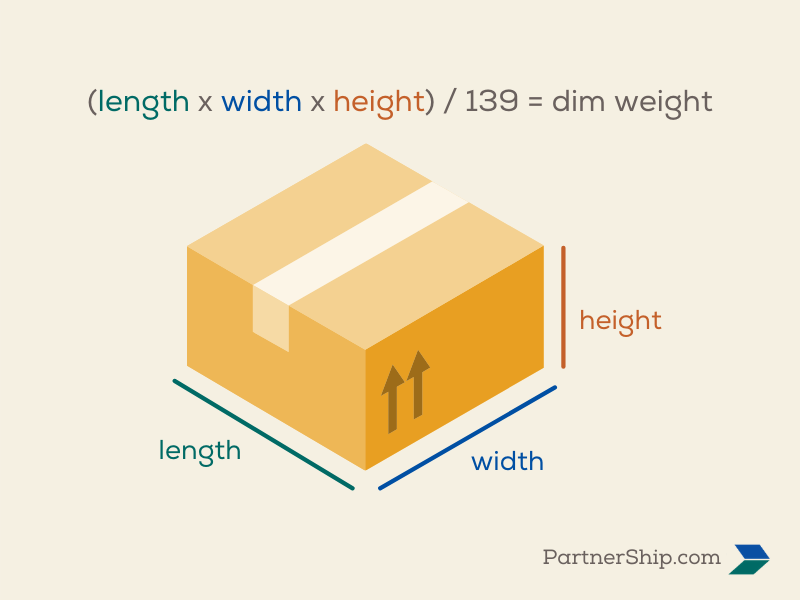
- If you ship a lot of low-density packages. This is no different than the past several years but is important nonetheless. The pricing structure that FedEx and UPS have in place discourages larger, lighter shipments. If your package dimensions cause your shipment to be rated at a higher weight due to dimensional (DIM) weight pricing, your cost increase could be compounded.
What you can do to mitigate the effects of the FedEx and UPS rate increases
- Right-size your packaging. While FedEx and UPS rates are based on weight, that’s not actually the whole story. If your dimensional weight is higher than the actual weight, your package will be rated using the dimensional weight - meaning you’ll be paying more. This makes any excess space within your package extra costly. Focus on packaging that allows space for the items you’re shipping and the necessary cushioning and nothing more.
- Consider opening or using a new distribution center. Shipments with the longest distance to travel cost you the most in general. Getting closer to your customers could be a great strategy for keeping those costs down.
- Evaluate the services you’re using. Ground services are the more economical option, and often the transit times are comparable to what you can get with some Express/Air services. Where you can, utilize Ground services to save on your costs.
- Take advantage of the discounts available to you. PartnerShip offers customers parcel discounts that can offset rising costs. Fill out a simple enrollment form to receive savings of at least 40% off FedEx Express and at least 25% off FedEx Ground. If you're a high volume shipper you may be eligible for even deeper discounts. See if you qualify and how much you could save.
Wrapping your head around all of the changes for 2027 FedEx and UPS rates can be challenging. But, using this guide to understand what's behind the announced average and published service guides is a good first step. Use this information to properly budget for the new year and set up any mitigation tactics that work best for your business. Looking for a way to mitigate the effects of the GRI? PartnerShip can help.

Click to read more...